
Optane Masonry & Home Improvements provides professional interior and exterior French drain services from our Elizabeth, NJ base, serving homeowners throughout North Jersey and selected New York areas.
Optane Masonry & Home Improvements is based in Elizabeth, NJ and provides interior and exterior French drain services throughout Elizabeth and surrounding North Jersey communities.
Water around foundations and basements can come from several directions. Surface runoff may collect beside the home, soil can become saturated after rainfall, and below-grade water can place pressure against foundation walls.
From our Elizabeth base, service may be available in Union, Linden, Hillside, Roselle, Roselle Park, Cranford, Rahway, Newark, Springfield, and other selected North Jersey areas.
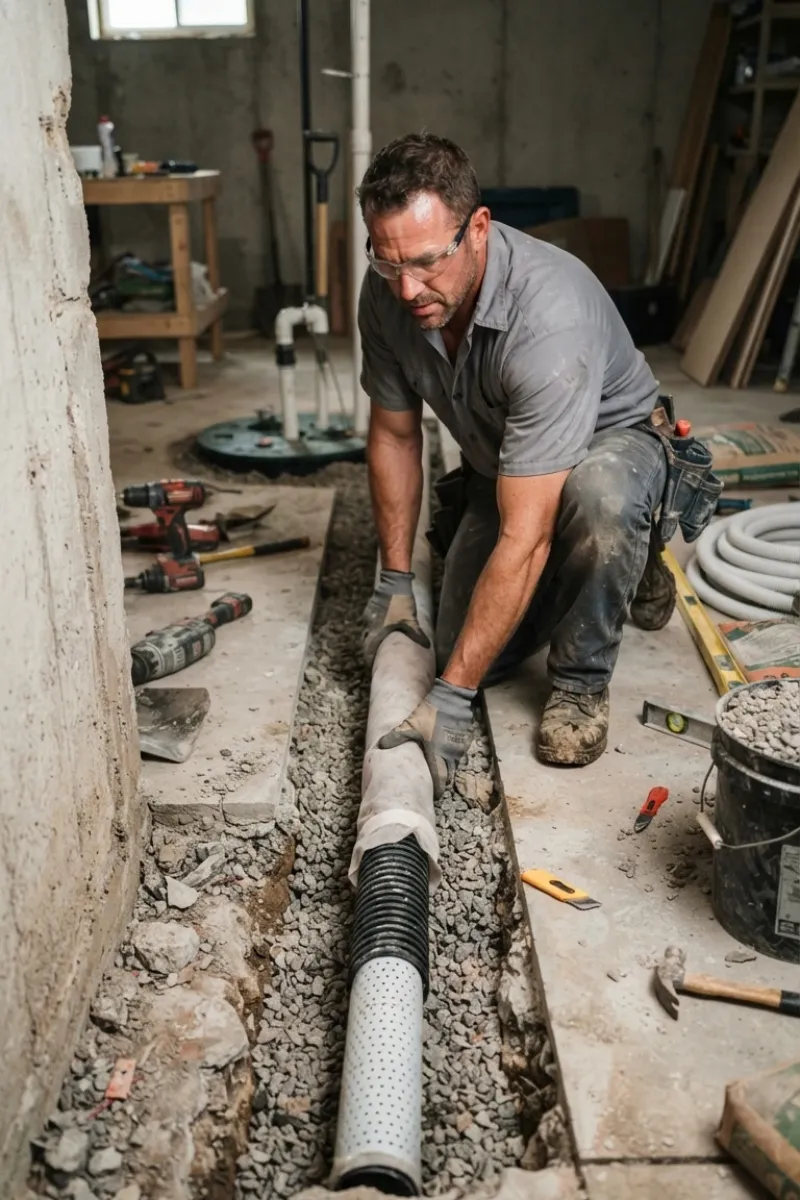
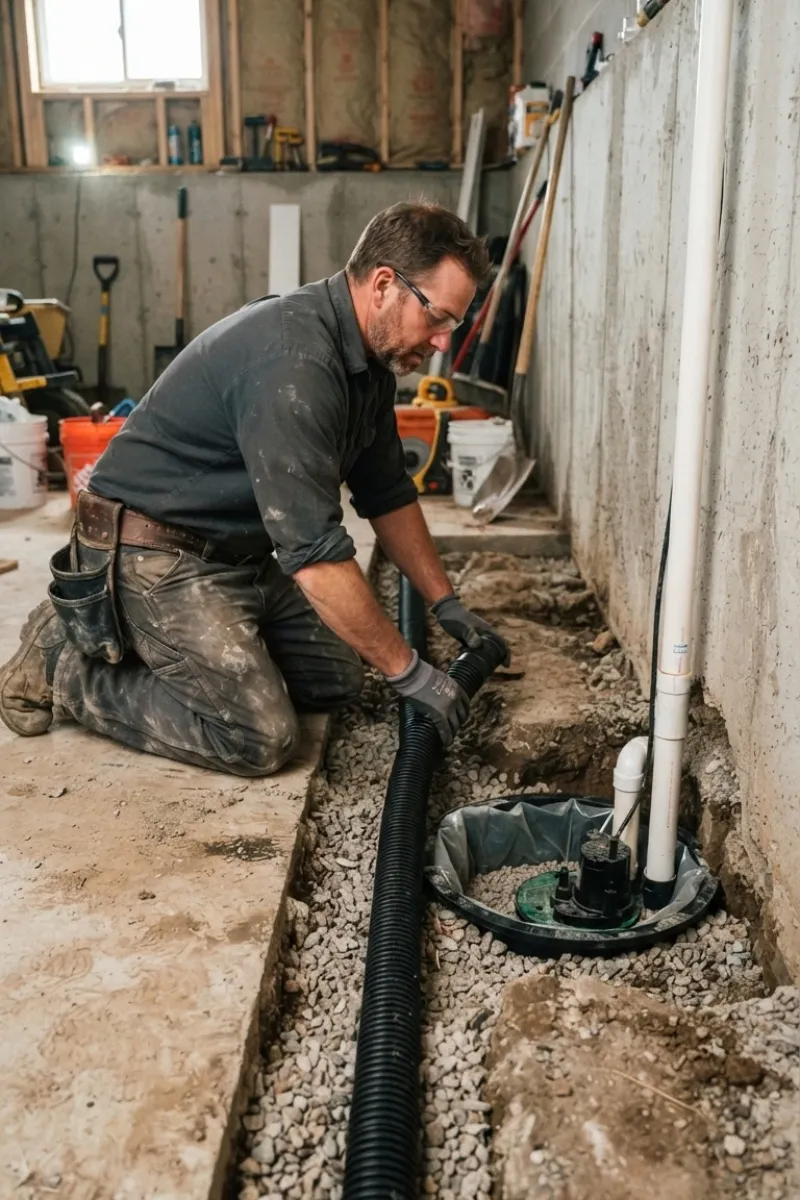
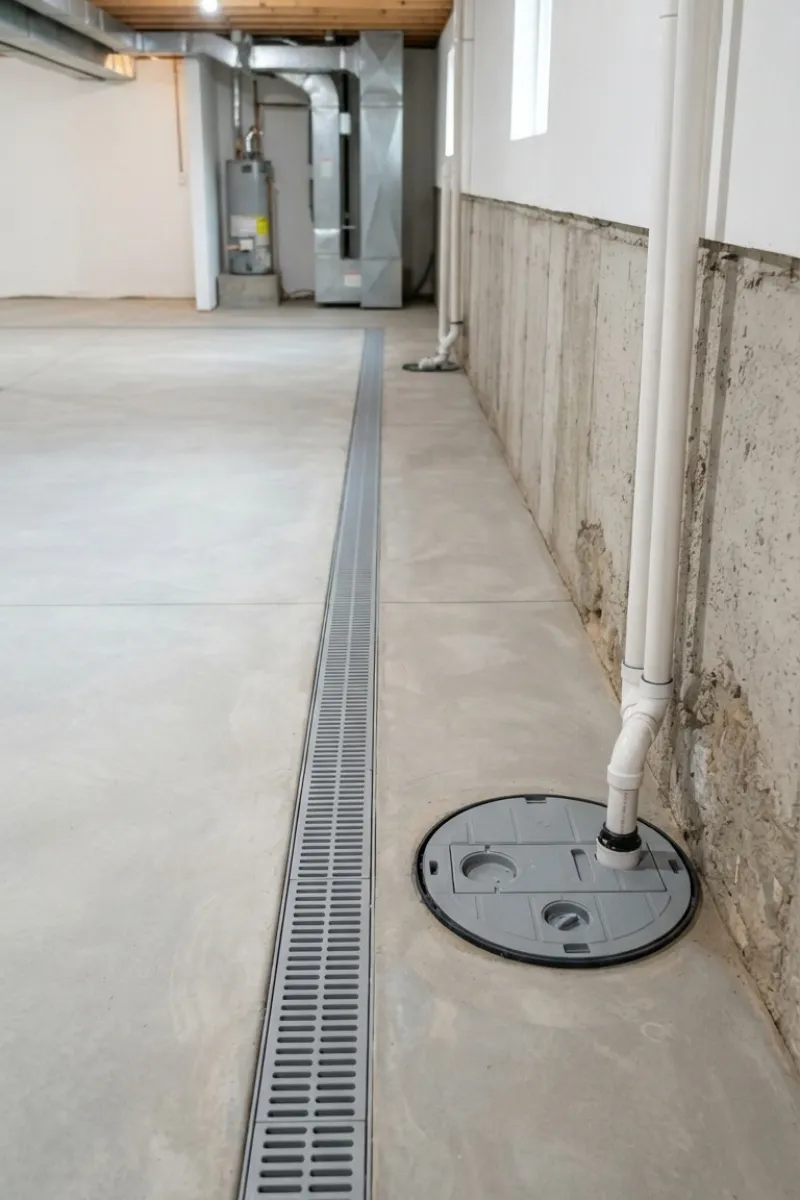
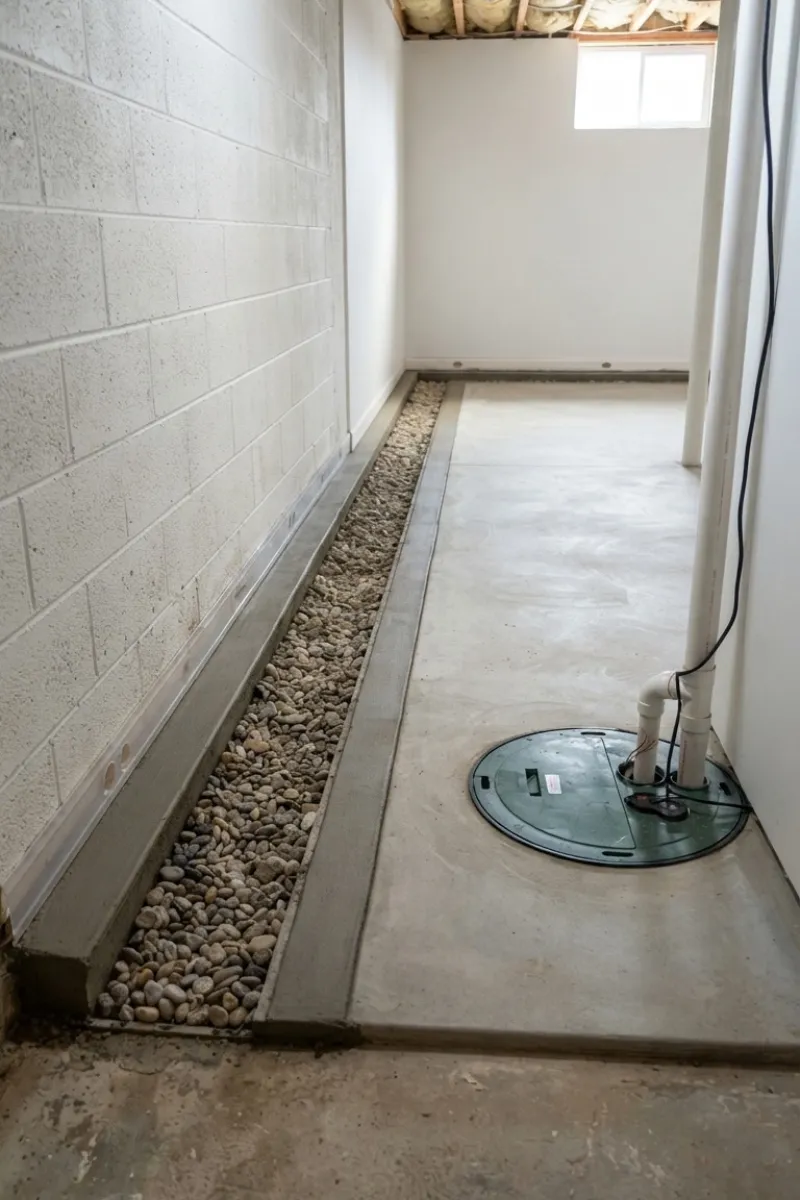
Interior French drains are commonly installed around the perimeter of a basement or lower-level foundation area to collect water that reaches the inside of the structure.
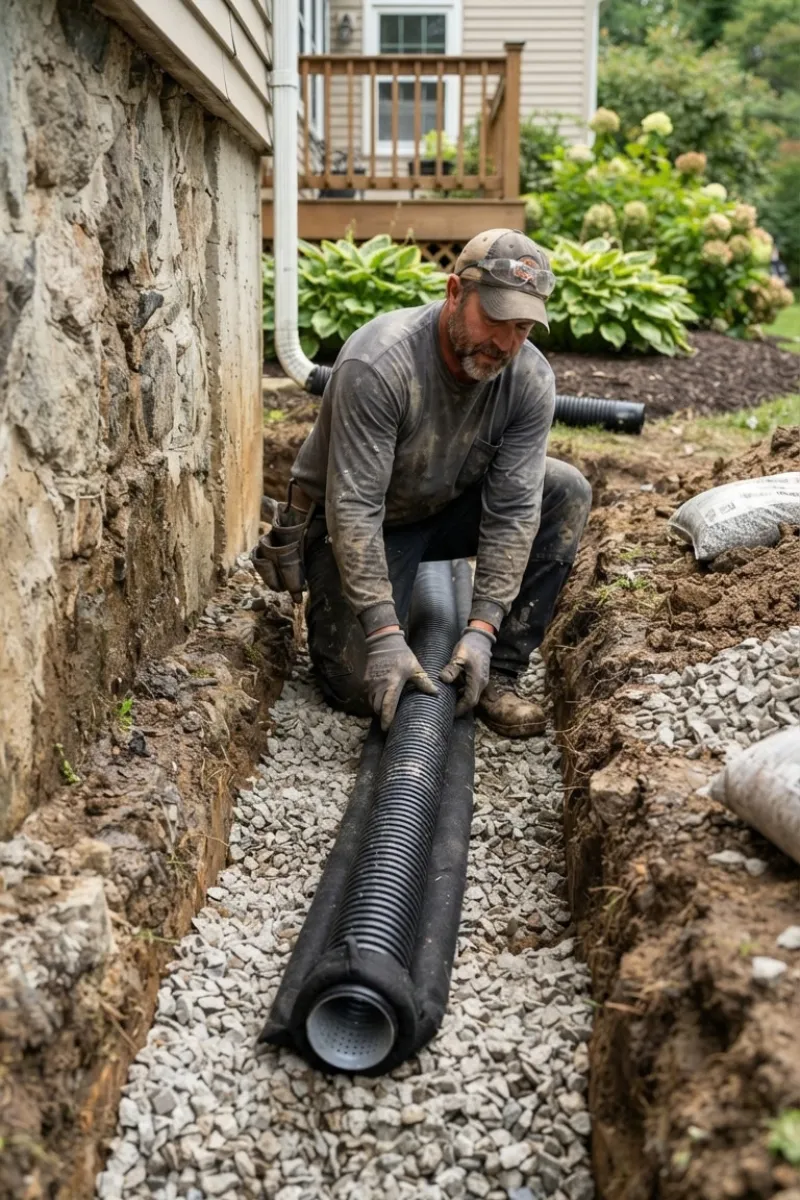
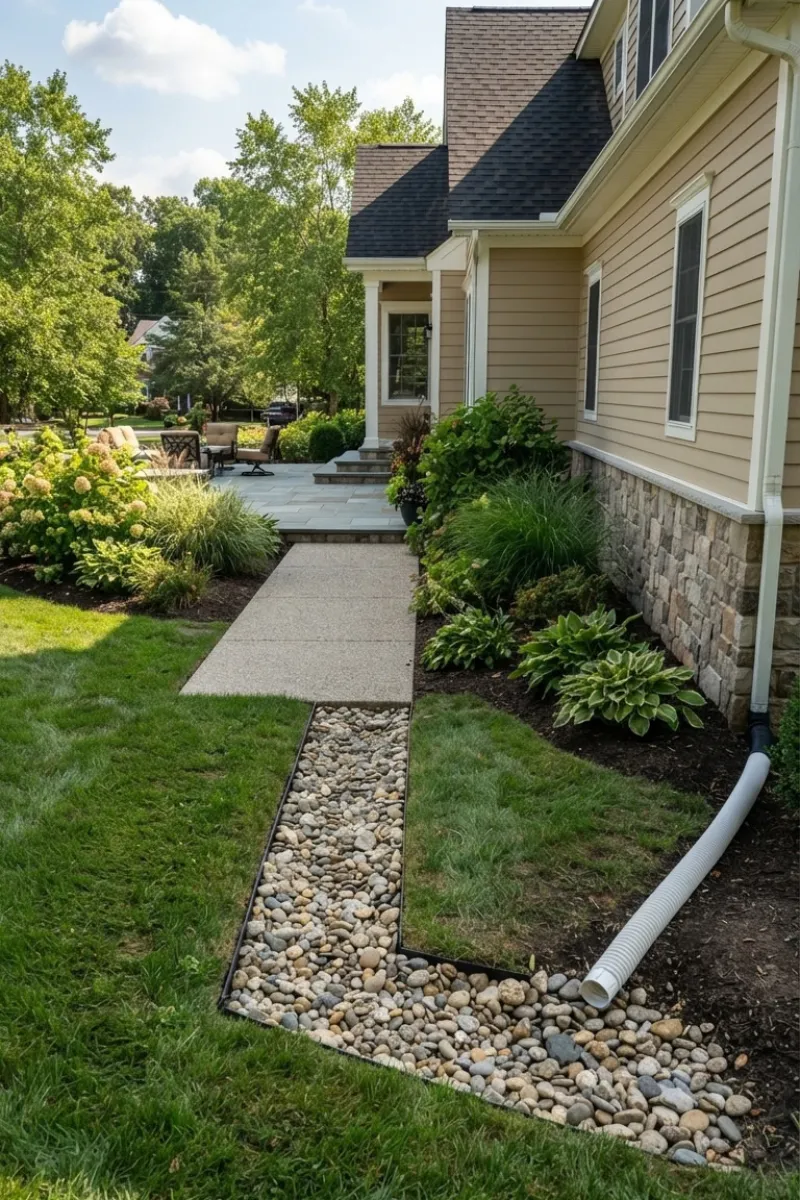
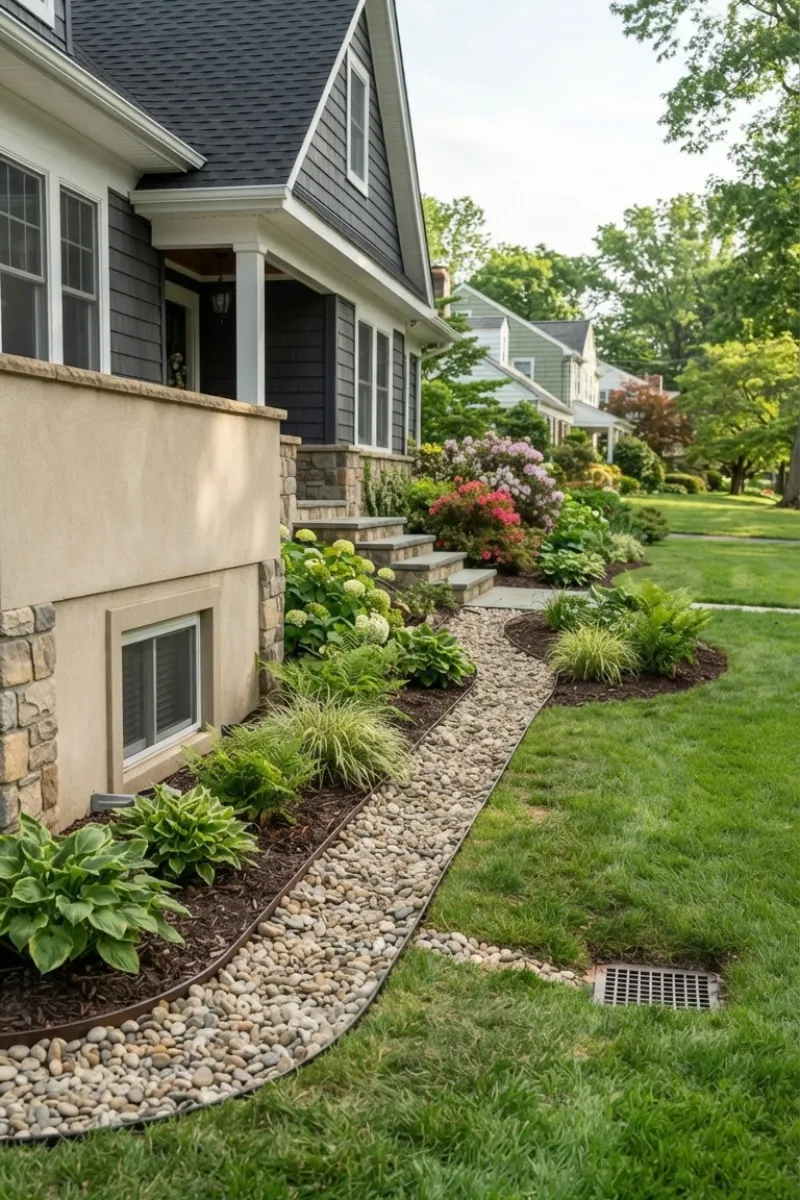
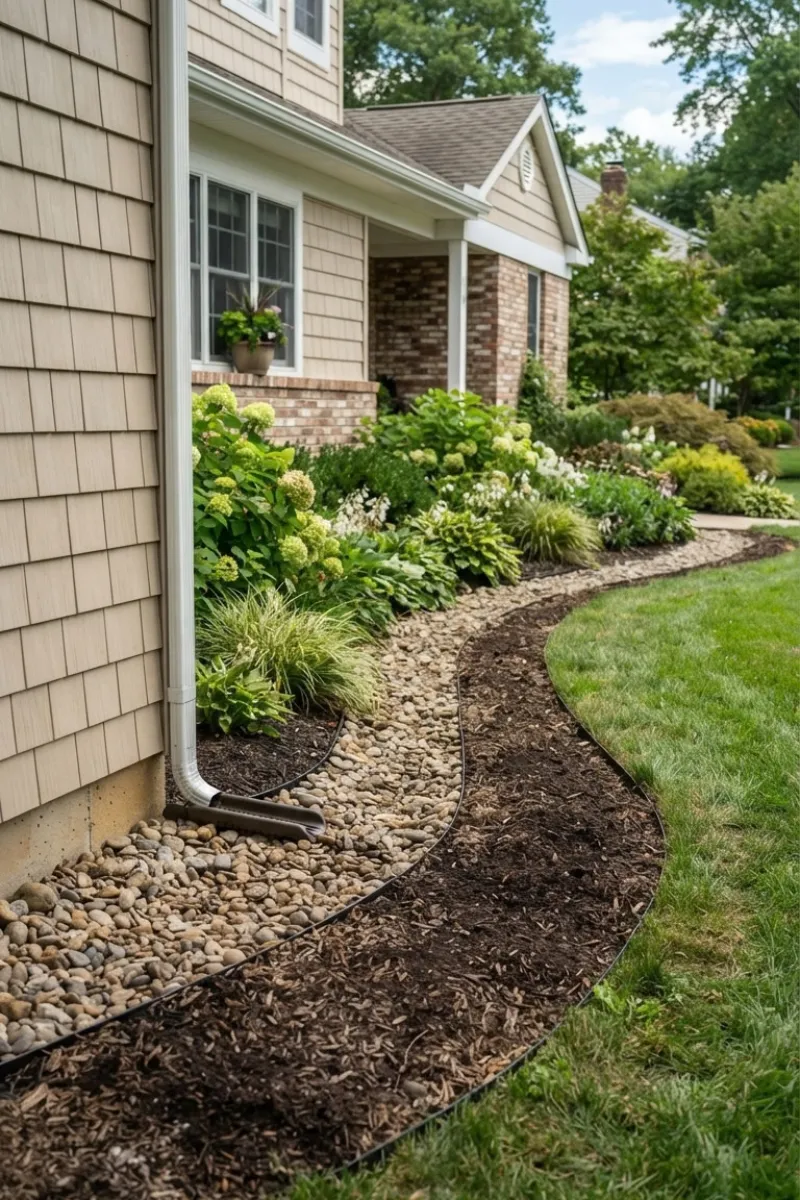
Exterior French drains are installed outside the home to intercept and redirect water before it reaches the foundation or other problem areas.
A French drain can be used as part of a broader foundation drainage approach where water collects around the perimeter of the home.
French drains can also be used in yards where surface or subsurface water repeatedly collects.
Existing French drains can become less effective if they were poorly installed, lack proper slope, become blocked, or discharge to an unsuitable location.
French drains are not one-size-fits-all drainage systems. Interior and exterior systems solve different types of water problems and are installed in different locations. The most important step is identifying where the water is coming from and whether it is reaching the property through surrounding soil, surface runoff, wall-floor joints, foundation cracks, or saturated areas near the home.
French drain problems are usually connected to recurring water movement rather than isolated puddles. The source, path, and discharge point all need to be considered before a drainage system is recommended.
Water may appear along basement walls, corners, or the floor-wall joint during or after periods of heavy rainfall.
Saturated soil, hydrostatic pressure, poor exterior drainage, foundation cracks, or water collecting around the perimeter may contribute.
An interior or exterior drainage system may be considered depending on where the water is entering and how it can be redirected.
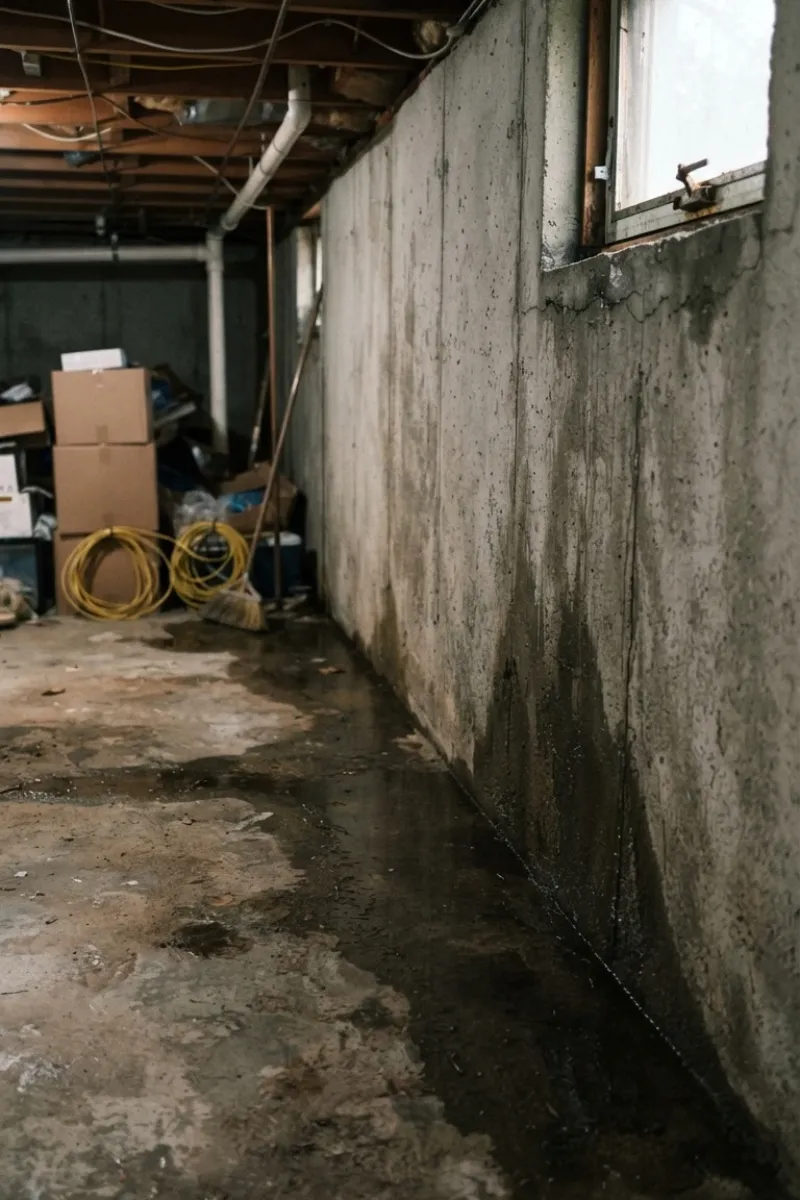
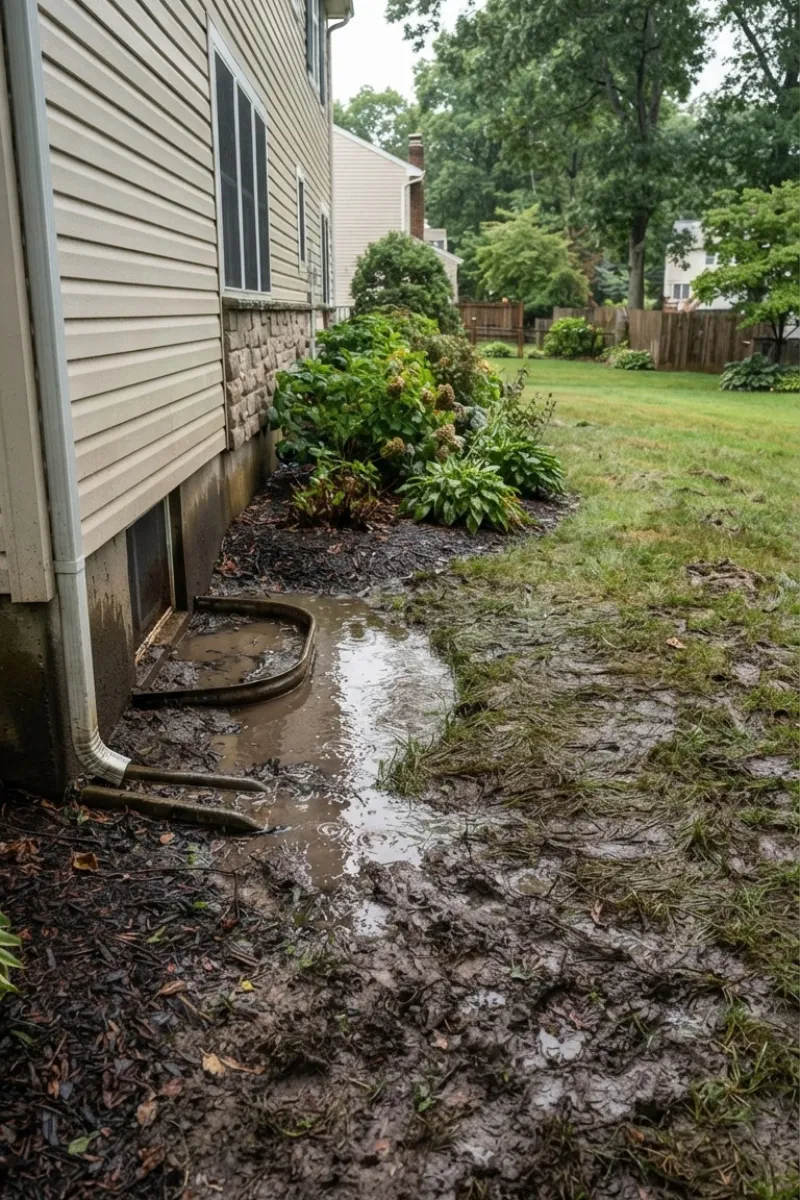
Rainwater may remain in low areas beside the home instead of moving away from foundation walls.
Poor grading, low spots, compacted soil, blocked runoff paths, or insufficient drainage may contribute.
An exterior French drain or other drainage correction may help redirect water away from the foundation.
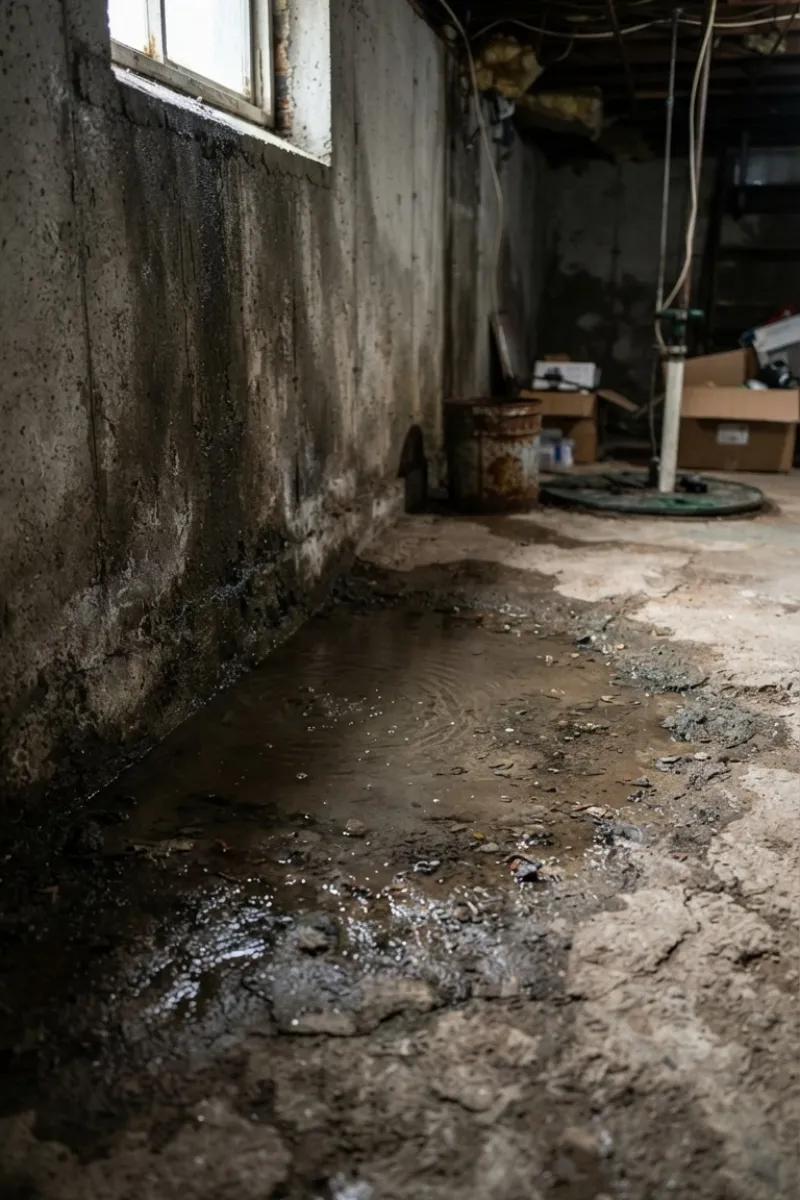
Sections of the yard may remain soft, muddy, or saturated long after rainfall has stopped.
Poor soil drainage, low areas, concentrated runoff, subsurface water, or inadequate grading may contribute.
A French drain may be appropriate where subsurface water needs to be collected and redirected to a suitable outlet.
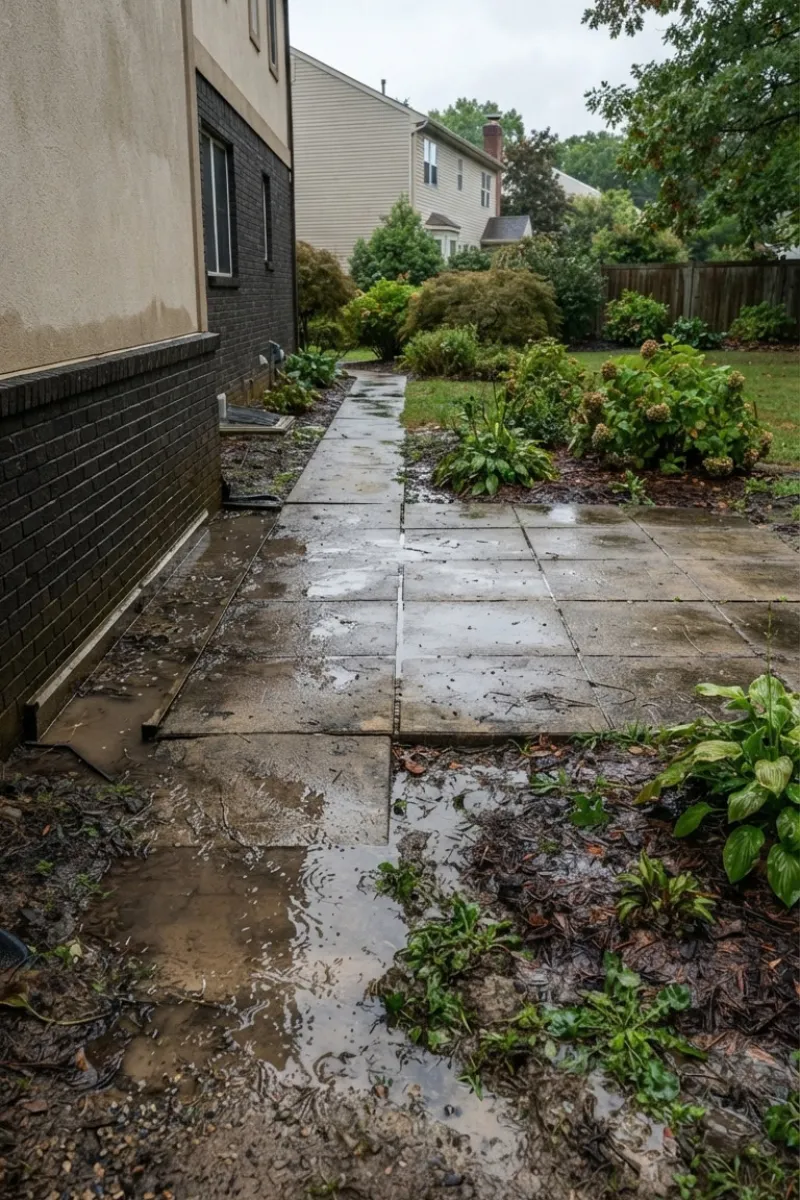
Water may repeatedly collect beside patios, walkways, or hardscape surfaces, causing low areas to stay wet.
Surface runoff, poor slope, settlement, surrounding grade, or restricted drainage paths may contribute.
A drainage system may be used alongside grading or hardscape correction depending on the source of the water.
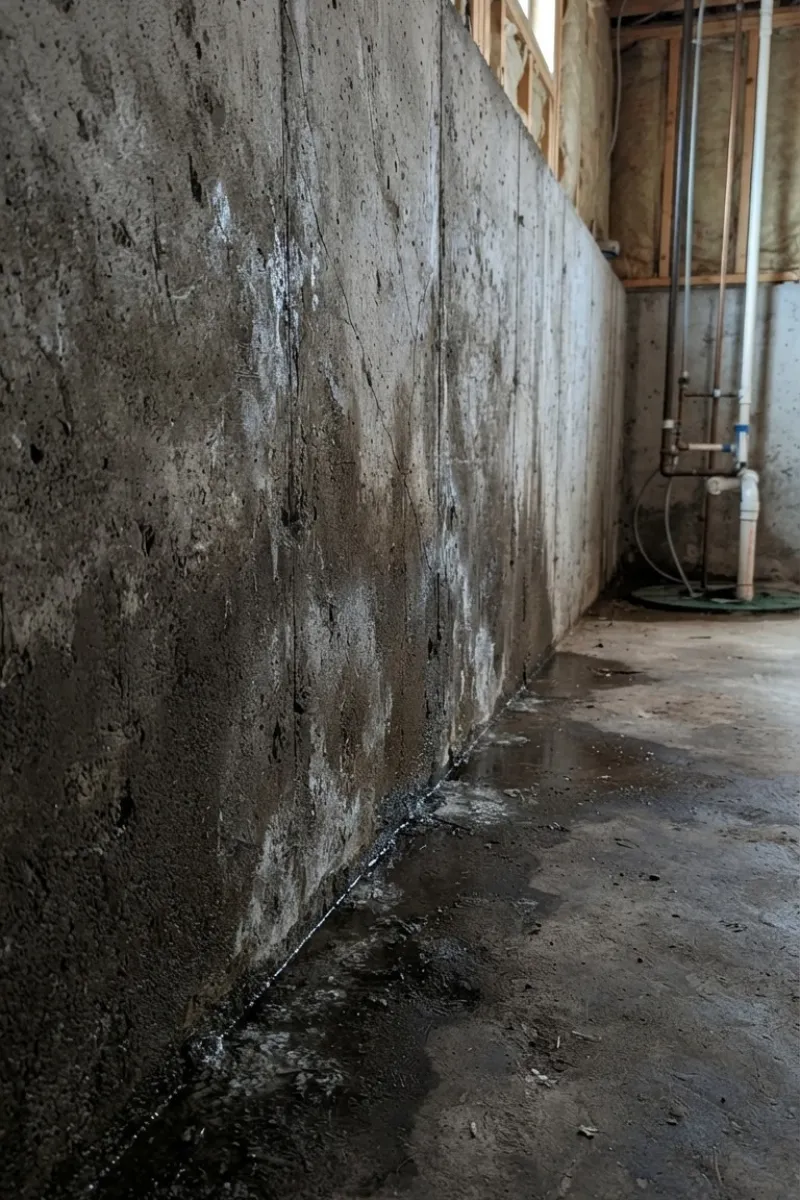
Basement walls may show dampness, staining, or seepage where water builds up in the surrounding soil.
Hydrostatic pressure, saturated soil, poor perimeter drainage, or prolonged moisture exposure may contribute.
Foundation drainage and waterproofing should be considered together to determine how water can be intercepted and redirected.
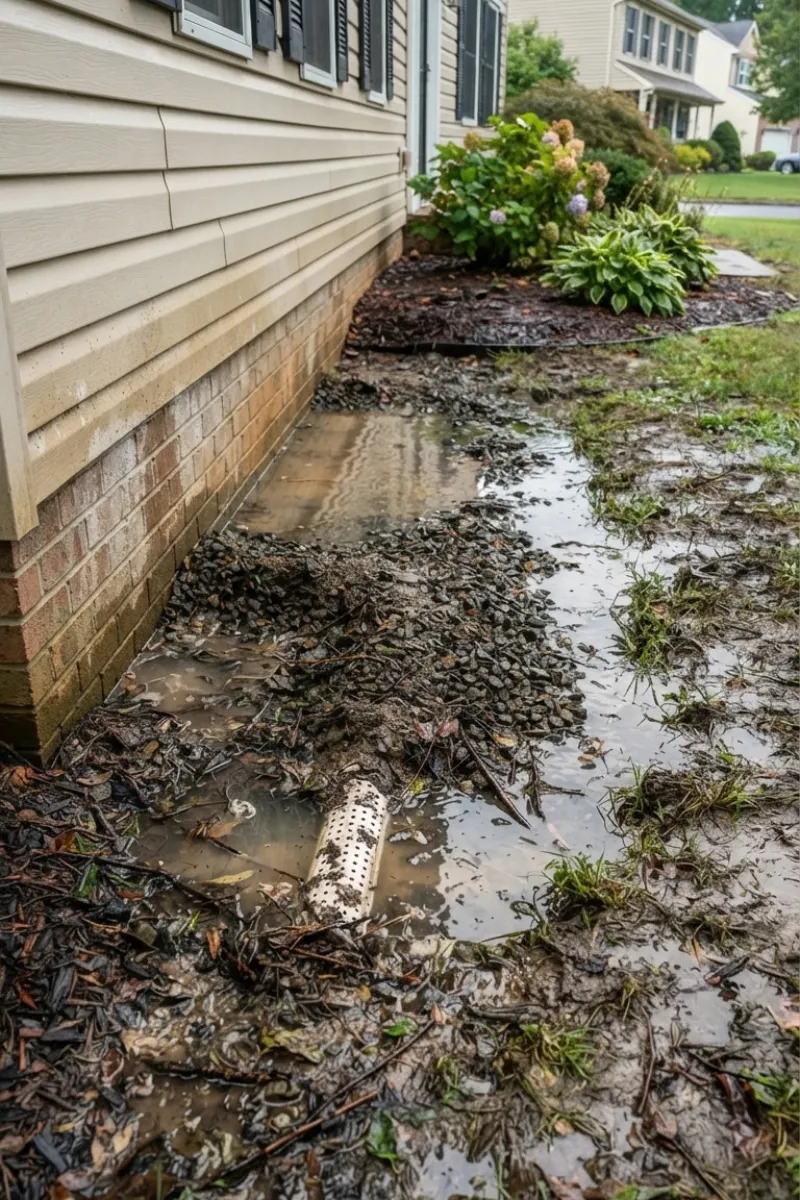
A drainage system may no longer reduce water problems, or water may remain near the area it was meant to protect.
Blockage, poor slope, inadequate outlet, incorrect placement, sediment buildup, or installation issues may contribute.
The existing system should be evaluated before cleaning, correcting, extending, or replacing affected sections.
Water problems around basements, foundations, and yards usually develop because water has nowhere effective to go.
If the ground slopes toward the house or contains low areas, rainwater can collect near foundation walls rather than moving away naturally.
Soil around a property can become saturated during prolonged or heavy rainfall. Once the ground can no longer absorb water efficiently, pressure can build around below-grade walls.
Water in saturated soil can press against foundation walls and floors. This pressure may contribute to basement seepage through cracks, joints, or vulnerable areas.
Downspouts, paved surfaces, driveways, patios, and neighboring grades can direct large amounts of water toward one area.
Old, undersized, blocked, or poorly placed drainage systems may fail to move water effectively.
Over time, soil settlement or hardscape movement can change how water travels across the property and create new low spots.
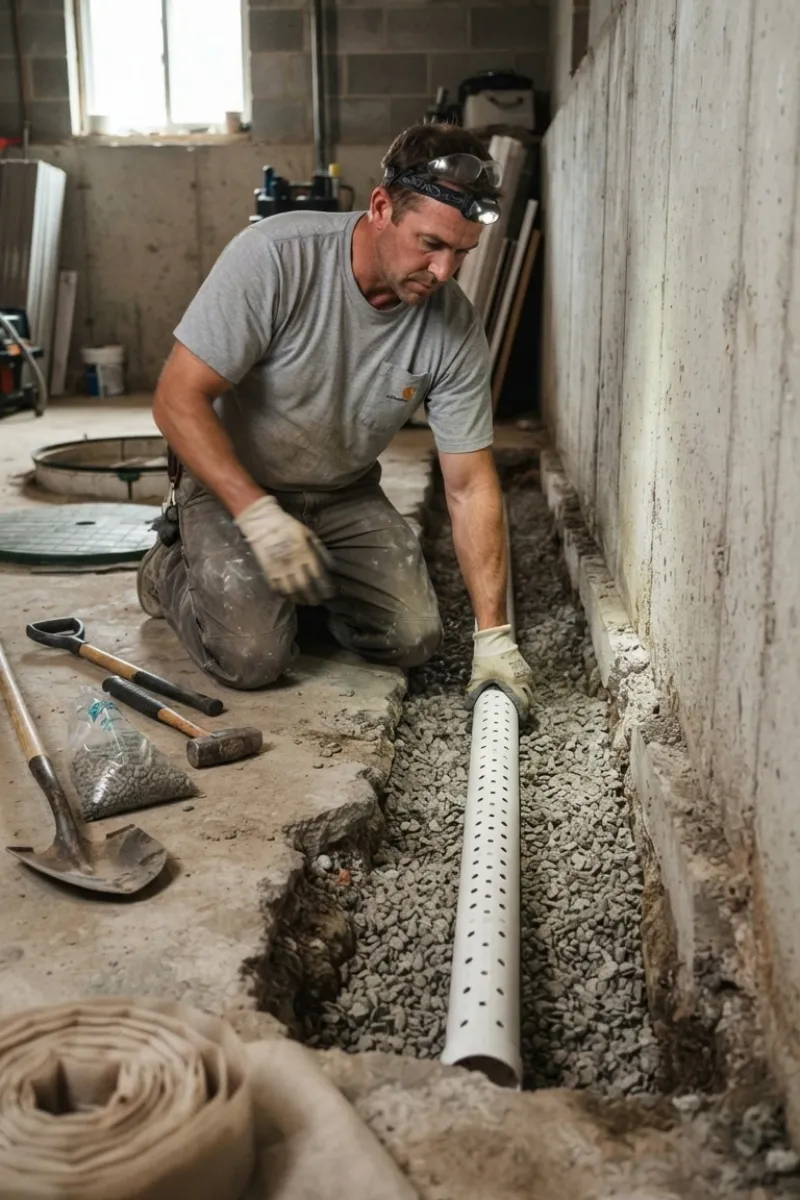
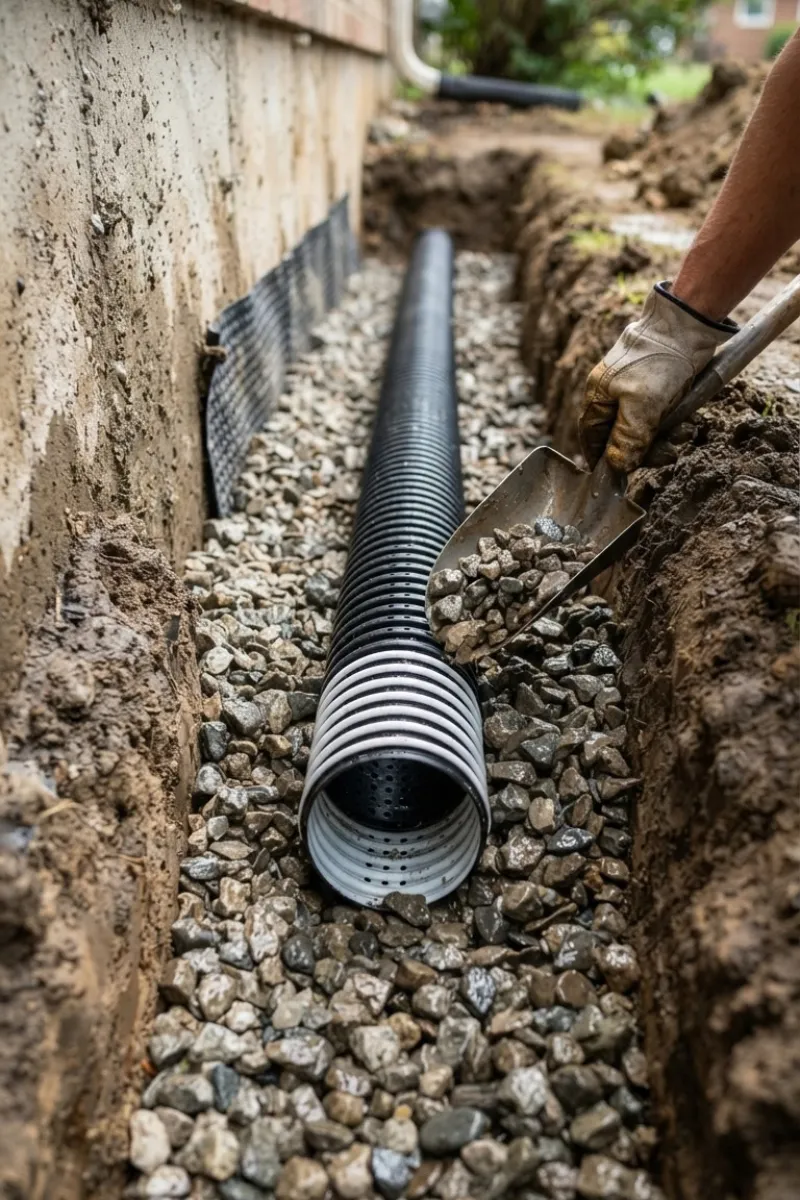
French drains collect water through a gravel-filled trench containing perforated drainage pipe. Water enters the trench, reaches the pipe, and is redirected toward an appropriate outlet.
Interior systems are generally installed along the inside perimeter of a basement or foundation area. Water entering at or near the wall-floor connection can be captured and directed away.
Exterior systems are positioned where water can be intercepted before it reaches the foundation or problem area.
The location and depth depend on what the drainage system is intended to protect.
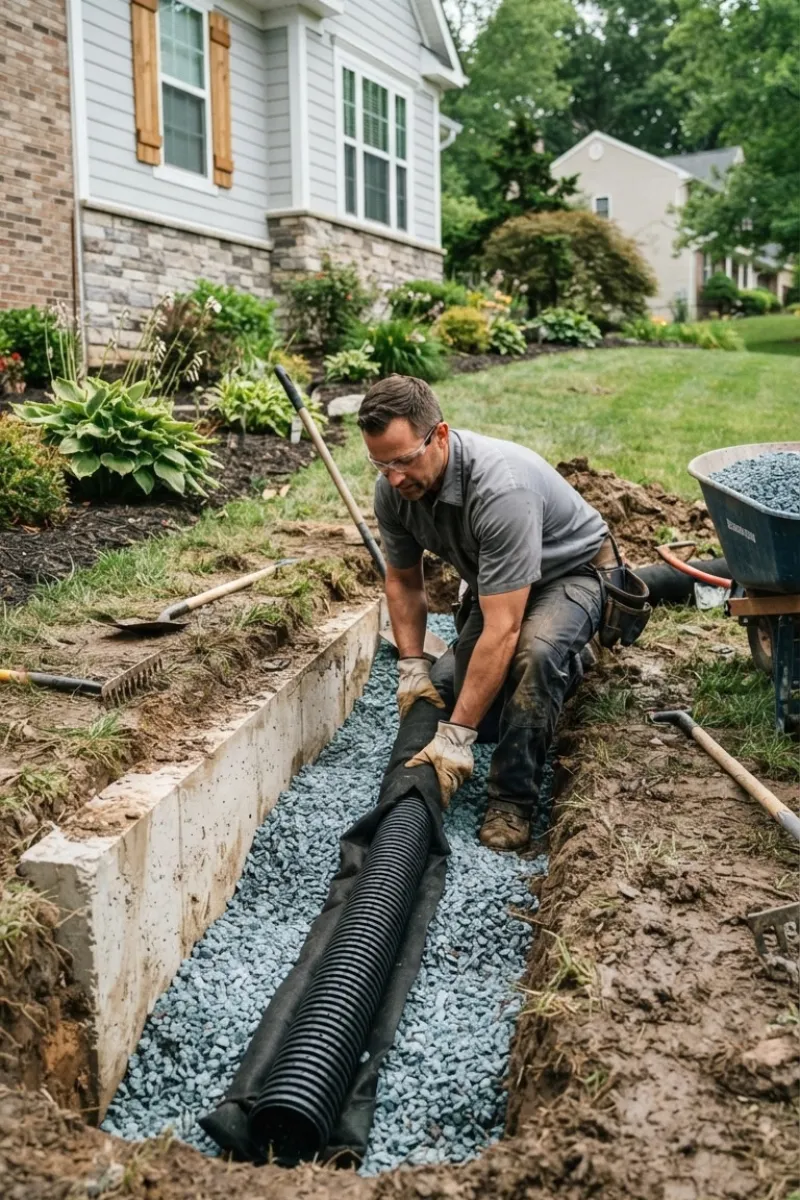
Perforated pipe allows water within the surrounding aggregate to enter the drainage line and move through the system.
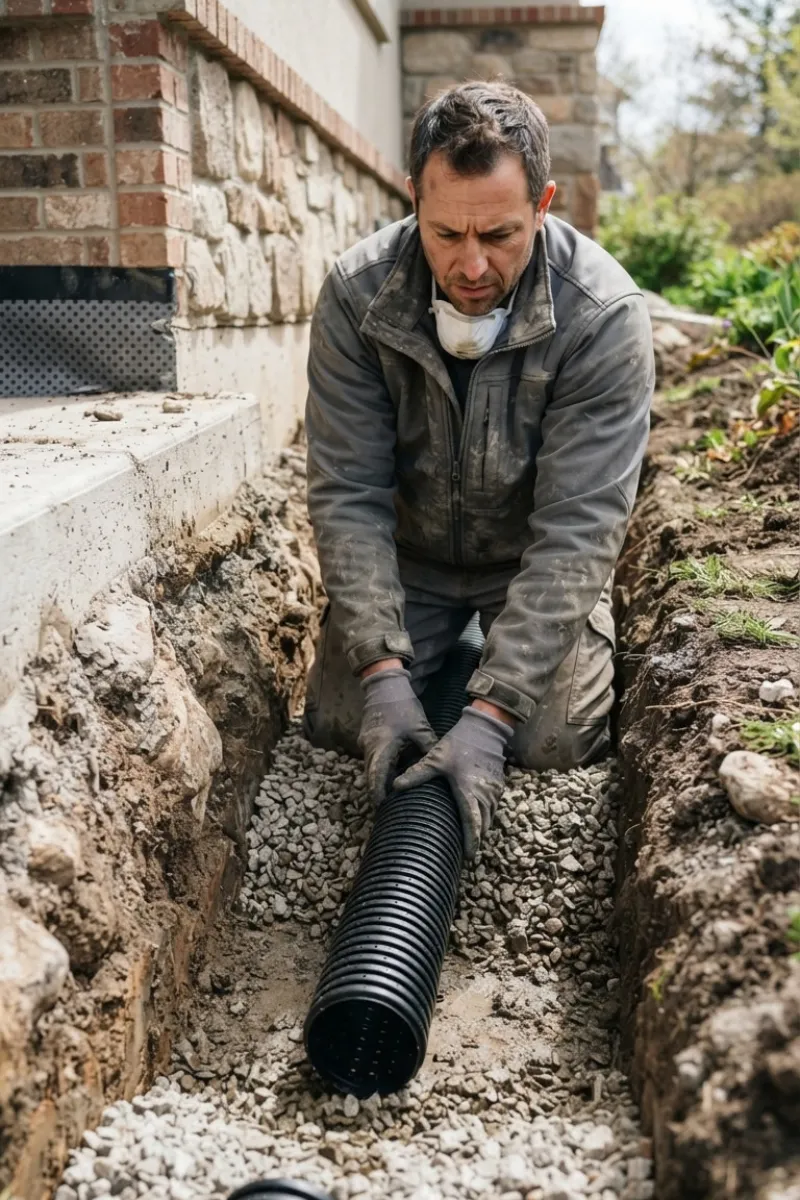
Clean drainage stone provides space for water to move toward the pipe while helping separate the pipe from surrounding soil.
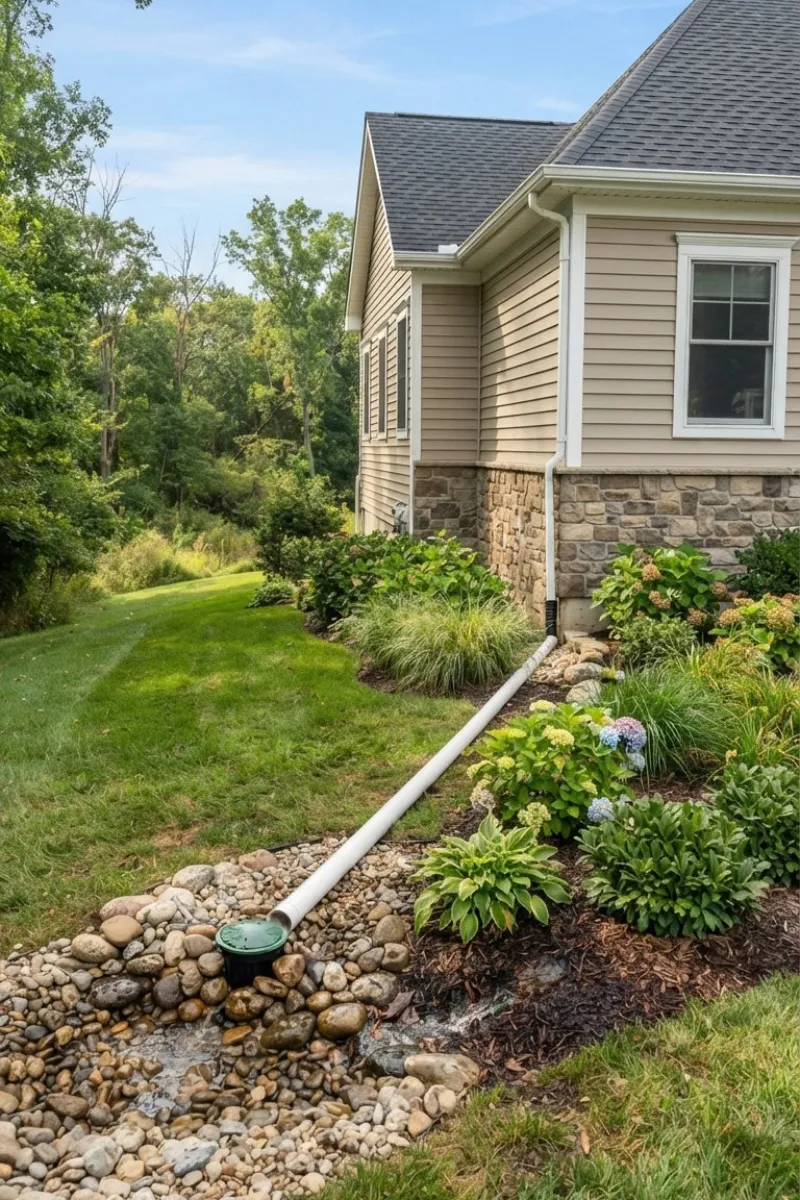
A French drain is only useful if the collected water has somewhere appropriate to go. The outlet location and route are therefore important parts of system planning.
The right location depends on the source of the water and the property conditions.
An interior French drain may be appropriate where water repeatedly reaches the basement perimeter and exterior excavation is not the preferred approach. It is typically designed to manage water after it reaches the foundation area and direct it toward a collection or discharge system.
An exterior French drain aims to intercept water before it reaches the structure. It may be useful where groundwater, runoff, low areas, or saturated soil are creating recurring problems around the foundation or yard.
Some properties may need drainage combined with waterproofing, grading, downspout corrections, or other exterior improvements.
The decision should consider the water source, basement condition, foundation type, surrounding grade, available discharge route, accessibility, and existing drainage.
A French drain should be selected because it addresses the actual water path, not simply because water is visible.
We review where water appears, how it moves across the property, basement moisture signs, foundation conditions, surrounding grade, and existing drainage.
We consider whether the water is coming from surface runoff, saturated soil, hydrostatic pressure, low areas, or another drainage condition.
The proposed solution is based on where water can be intercepted and how it can be safely redirected.
The trench, aggregate, drainage pipe, and related components are installed according to the agreed drainage layout.
The completed system and outlet path are reviewed against the intended drainage function.
Optane is based in Elizabeth, making North Jersey the primary service area. Masonry and hardscape services are available across nearby communities, with selected New York coverage provided as an additional service region.
Serving New Jersey property owners with reliable masonry, foundation, drainage, roofing, and exterior improvement solutions.
Providing masonry, foundation, drainage, roofing, and home improvement services across communities throughout New York.
Property owners can review actual Optane work before discussing their own masonry or exterior improvement project.
Before choosing a contractor, property owners can review genuine customer feedback published by Optane.
Optane is based in Elizabeth and primarily serves North Jersey properties.
The drainage approach can be selected according to where water is entering and where it needs to be intercepted.
French drain planning can be considered alongside basement moisture, foundation condition, and surrounding exterior drainage.
The source and path of water are considered before a drainage system is recommended.
Where drainage and basement moisture overlap, waterproofing solutions can also be considered.
HIC License: HIC.0703840
Optane Masonry & Home Improvements provides a range of exterior, structural, drainage, waterproofing, and home improvement services.
Basement water, saturated soil, standing water, foundation moisture, and recurring drainage problems can require different solutions depending on where the water begins and how it moves across the property. Optane Masonry & Home Improvements provides interior and exterior French drain services from its Elizabeth, NJ base throughout North Jersey and selected New York areas.
An interior French drain collects water around the inside perimeter of a basement or foundation area, while an exterior French drain intercepts water outside before it reaches the structure or another problem area. The better option depends on where the water is coming from and how it can be redirected.
Yes, depending on the source of the water. Interior perimeter drains can help collect water that reaches the basement area, while exterior systems may reduce water reaching the foundation in the first place. Waterproofing or other drainage improvements may also be needed.
Persistent wet areas can result from low spots, poor soil drainage, surface runoff, compacted ground, or subsurface water. A French drain may help where water needs to be collected below the surface and redirected to a suitable outlet.
It may help where groundwater or runoff is collecting near the foundation, but the full drainage condition should be evaluated first. Grading, downspouts, waterproofing, or other measures may also be relevant depending on the property.
Yes. Optane Masonry & Home Improvements is based in Elizabeth, NJ, with North Jersey serving as the primary service region. Interior and exterior French drain services may be available throughout Elizabeth and nearby communities including Union, Linden, Hillside, Roselle, Cranford, Rahway, Newark, and other selected areas.
Optane also provides selected New York coverage in addition to its North Jersey market. Staten Island is part of the current retained New York service area. Property owners can contact the New York number to discuss their drainage problem and service availability.
914-438-8461
201-982-2375